Rongai Route Overview
Route overview, difficulty, success rates, itinerary, and expert tips
Overview of the Rongai route
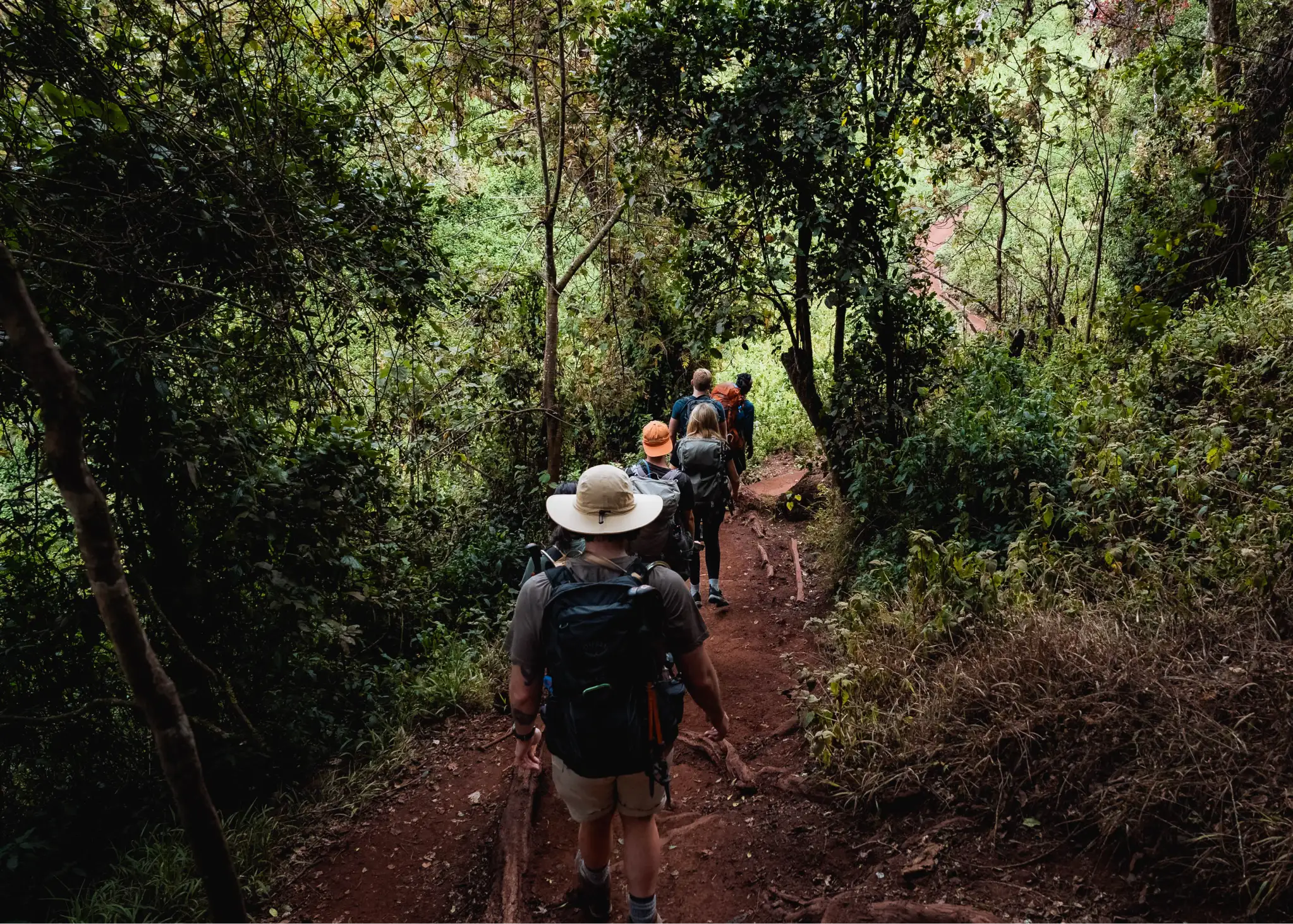
The Rongai route is a less popular Kilimanjaro trail that has many unique advantages. Beginning on the northern slope of the mountain in a coniferous forest, it traverses a variety of climatic zones. The descent follows the Marangu route on the southwestern side of Mount Kilimanjaro. Here’s why this route stands as a top choice for climbing Kilimanjaro in 2025.
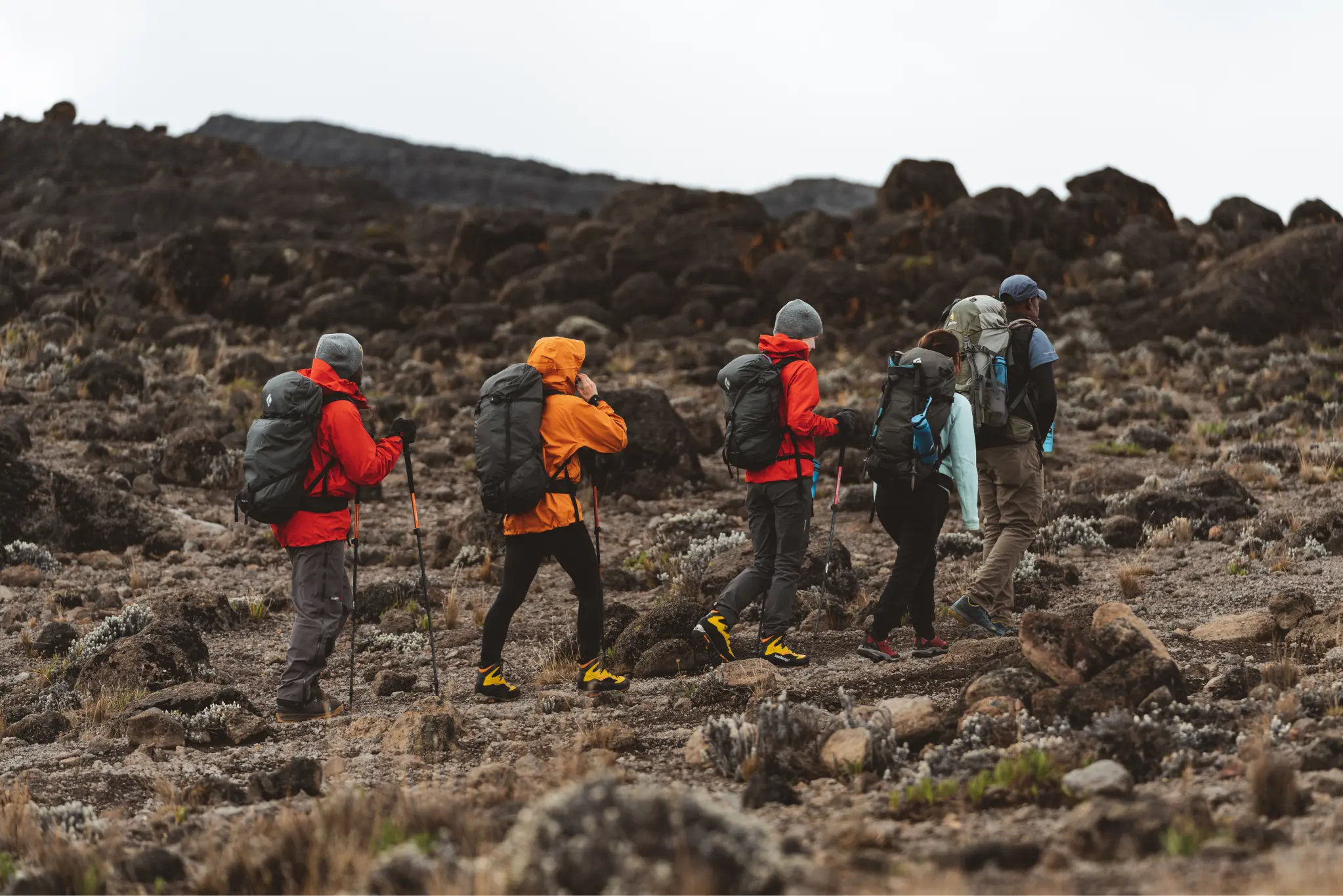
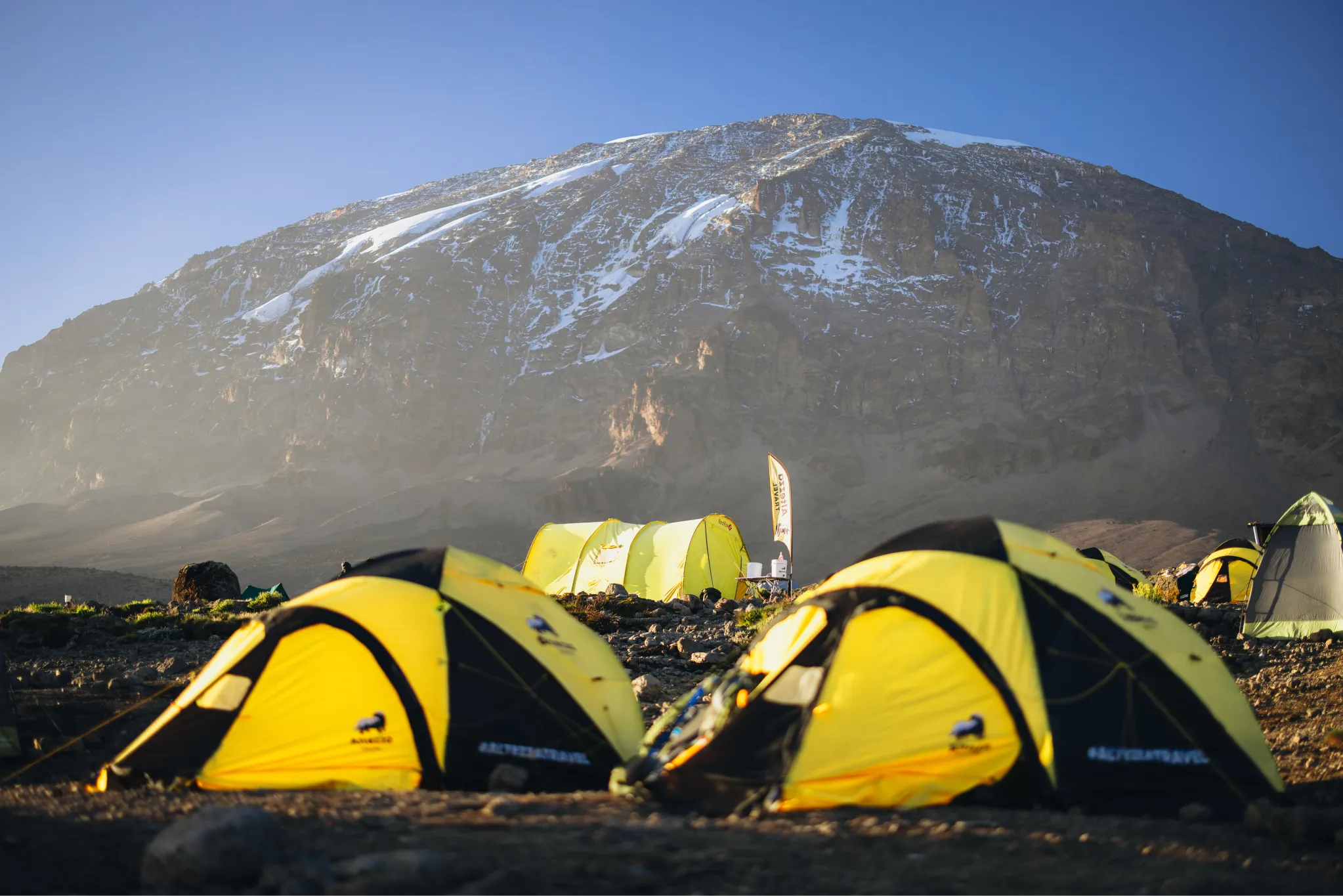
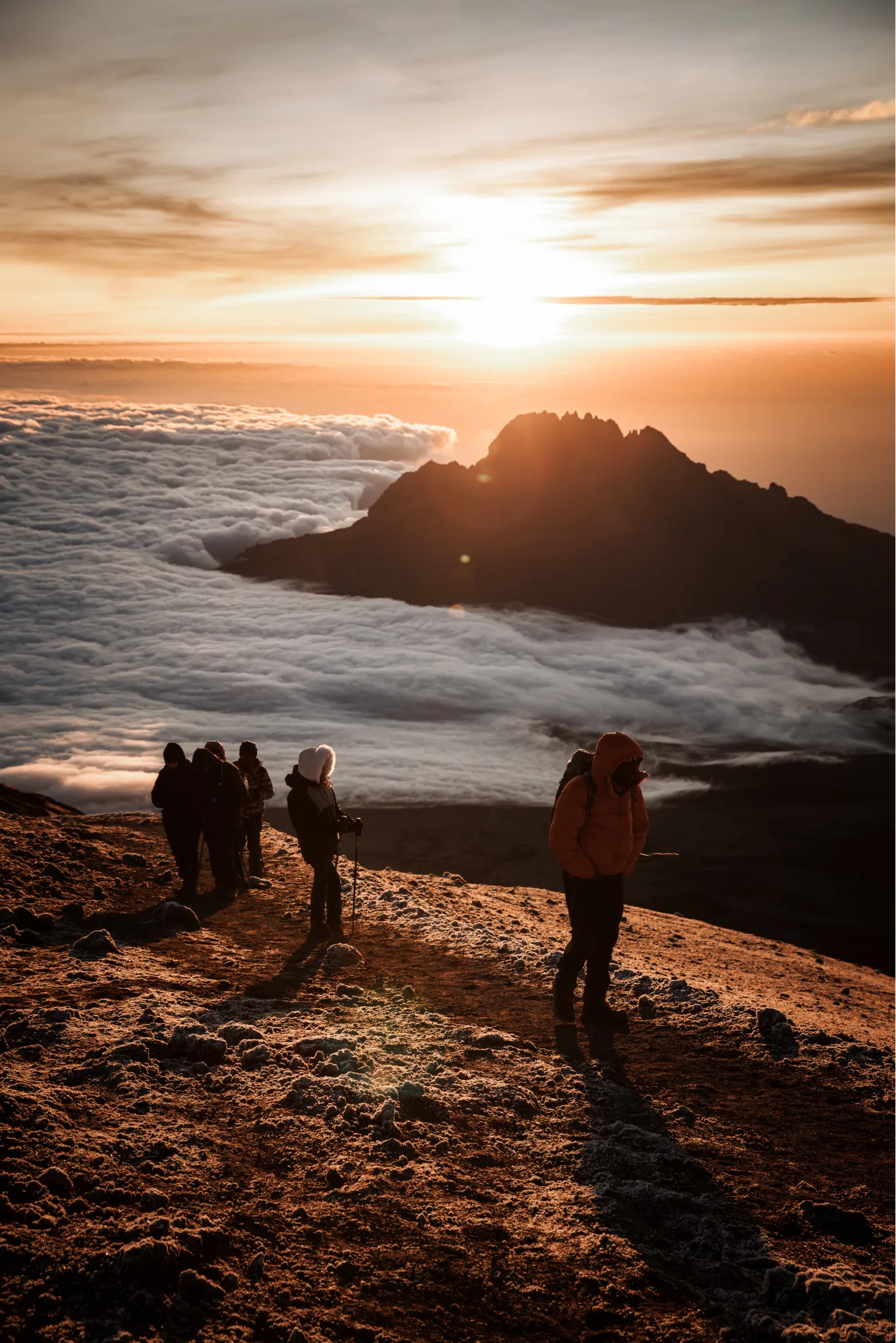
Firstly, it’s much less crowded than the busy southern Kilimanjaro trekking routes. You will see ten times fewer trekkers on this route! Secondly, it is amazingly scenic, offering great views on Mawenzi and Kibo – two of Kilimanjaro’s volcanic cones, the surrounding Tanzania landscapes, and unique flora like Kilimanjaro Giant Groundsels and tropical forests on the descent. While the northern slopes are drier and have less dense vegetation, there is plenty to see on your way up. Imagine awakening near the majestic peak of Mawenzi, its rocks bathed in the soft hues of sunrise, and spotting rare Bearded Vultures dance and glide, setting their course towards the distant horizon of Kenya. This route offers trekkers a more secluded and intimate experience for those seeking a quieter trekking adventure on Kilimanjaro.
Safety first: To maintain our strict safety standards, mountain expeditions are available only to participants aged 12–70 years.
52 reasons to choose Nuru expeditions on Mt Kilimanjaro Why Us
Discover what makes us the one of the most trusted and well-prepared Kilimanjaro operator, from safety and training to every detail on the mountain.
kilimanjaro-packing-list.pdf
Expert recommendation
This route is available in 6 and 7-day programs. If you’re a beginner without prior acclimatization, the 7-day itinerary offers a significantly better acclimatization profile. This means that the overall experience will be more comfortable and your chances of summiting will be higher. The 6-day itinerary would be suitable only for those with experience in high-altitude trekking and/or with prior acclimatization.
Agatha
Kilimanjaro Nuru Expeditions Coordinator Tanzania
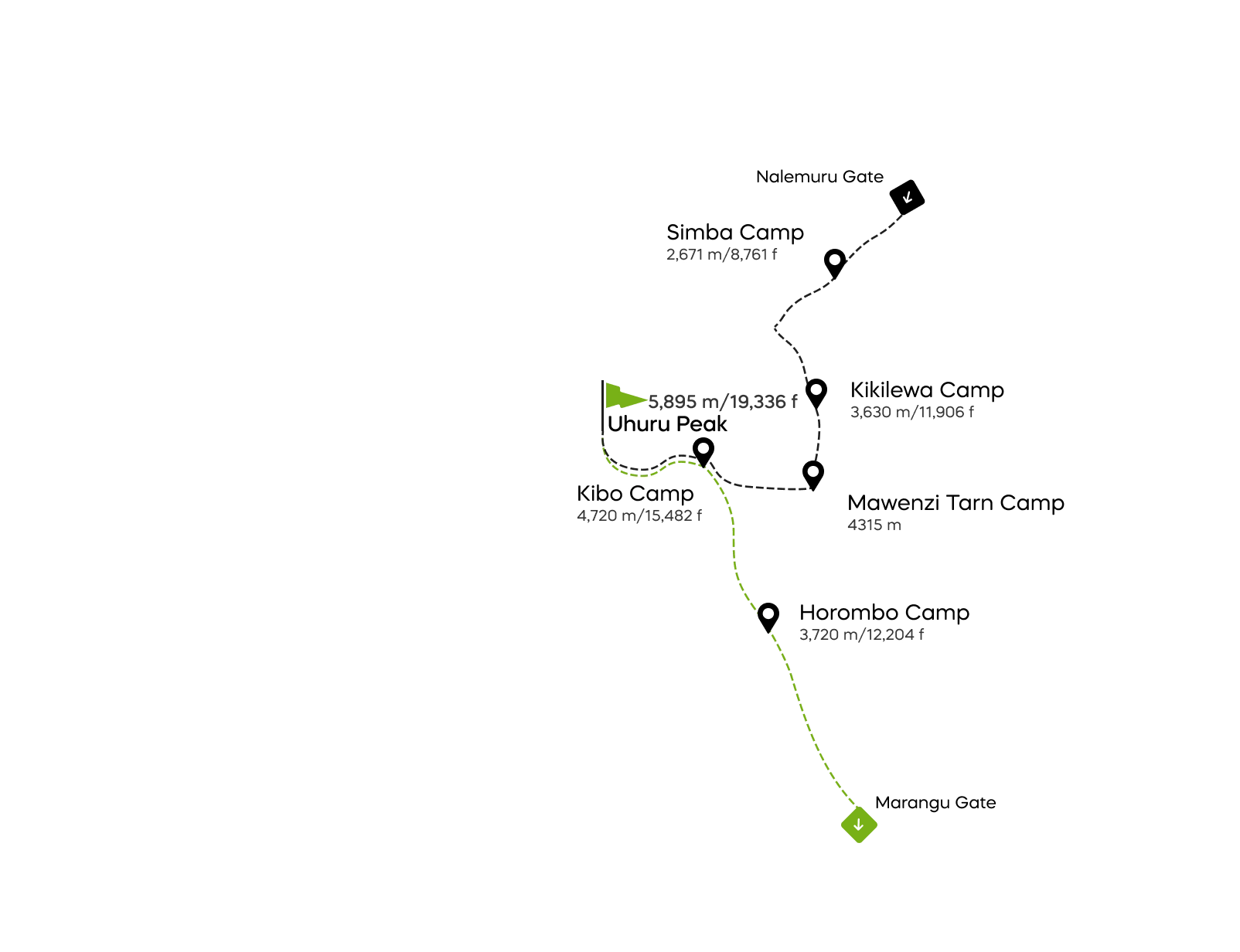
Rongai route on the Kilimanjaro map

Get PDF Kilimanjaro Packing List
Free Kilimanjaro Packing List with gear necessary for the hike and recommendations from Nuru experts.
Join our Kilimanjaro Climbs
Summit success rate on the Rongai route
At Nuru, we’ve organized thousands of epic Mount Kilimanjaro climbs since 2014 and kept detailed statistics. Here are the Rongai route summit success rates:
6-day trek – Crater Rim: 91.0%, Uhuru Peak: 86%
7-day trek – Crater Rim: 93.9%, Uhuru Peak: 86.8%
The data shows that the 7-day Rongai itinerary has a slightly higher summit success rate than its 6-day variation. Keep in mind that many hikers who choose this route 6 already have some experience and make it to the top despite the higher difficulty. This means that on the 7-day itinerary, a beginner will have a significantly higher chance of summiting.
We are proud to show real summit success rates without any deception. Several factors go into making your expedition safe and memorable, with the highest chances of summiting possible. Firstly, the experience and professionalism of our mountain guides play a significant role. They are experts on high-altitude acclimatization and will always assist you if any symptoms of altitude sickness arise, ensuring your well-being remains the top priority. The lack of experienced guides is a primary reason many other operators struggle to fulfill their high summit success promises. At Altezza, we offer the best wages in the region and invest heavily in the training and education of our staff, attracting top talent to our team. Rigorous safety protocols and equipment are also key. Altezza guides conduct two in-depth medical check-ups daily to ensure your acclimatization progresses well. Additionally, we possess more oxygen tanks than all other Kilimanjaro companies combined and have specially designed first aid kits with a range of medications. All these factors combine to give you the best chance of reaching Uhuru Peak.
Want to plan a memorable Tanzanian adventure? Contact our guest experience expert.
Agatha // Online
WhatsApp Chat Online
 BASED IN TANZANIA
Contact us. We are always here to help.
Rongai Route Detailed Itinerary
DAY 1

Arrival
Arrival at Kilimanjaro International Airport (JRO), where you will meet our guest experience expert and representative, and transfer to the hotel under the rate. The hotel will provide all the essentials for a comfortable stay: cozy rooms, hot water, polite staff, a swimming pool, and Internet access. In the evening there will be a briefing with our managers, who will also make sure you are ready to begin the climb.
Private tour packages include shared airport transfers for your group. Extra charges will apply for additional individual transfers. To avoid extra costs, sync your group’s arrival and departure times.
PLEASE NOTE:Check-in starts at 2:00 PM.
DAY 2

Trekking from Nalemuru gate to Simba Camp
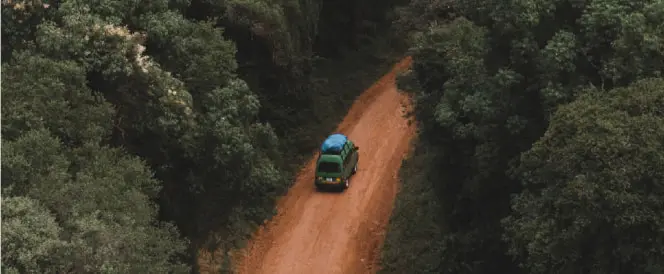
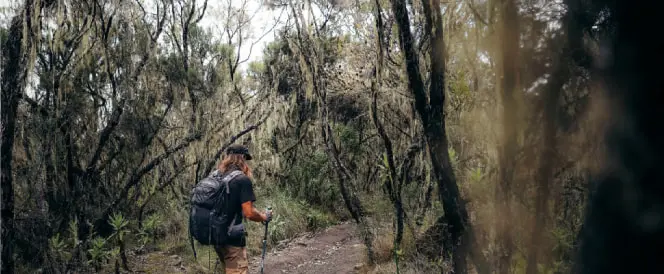
A guide and a mountain support crew will arrive at your hotel in the morning in order to meet you and hold a quick briefing, after which you will travel by vehicle to Kilimanjaro National Park’s northern entrance: Nalemuru Gate (2,020 m /6,627 f). After the quick formality of acquiring climbing permits and registering with the search and rescue service, the group will start trekking up to Simba Camp (2,671 m /8,761 f).. Your trek this day will be moderate and take you through the coniferous forest up Kilimanjaro’s northern slope. Remember not to hurry and always keep a comfortable pace. By the time you reach the camp, our professional mountain crew will have prepared everything necessary, put up tents, and begun preparing dinner.
This will be your first day at this altitude, so it is strongly recommended you heed the following instructions from this point on:
- Drink over 4 liters of bottled water daily (little by little, frequently);
- To help alleviate symptoms of altitude sickness, consider using a preventive measure like a high-altitude aid medicine. Many mountain climbers take such pills in the morning, before they begin their ascent, to reduce discomfort associated with altitude sickness. Our managers will provide more specific details together with your travel itinerary. We recommend consulting your doctor prior to the trip to discuss any potential allergies or health concerns.
It is not uncommon to experience discomfort during the night, high altitude has this effect on the human body. Nausea and headaches are common occurrences in the mountains. However, make sure you alert your guide if you feel any symptoms of altitude sickness.
 Trekking time: 3-4 hours
 Distance: 8 km (4.9 miles)
DAY 3
Trekking from Simba camp to Kikilewa Camp
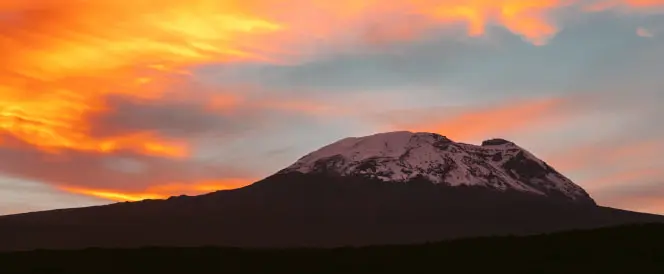
This day starts with an early breakfast and then departure from Simba Camp to the second high-altitude camp: Kikilewa Camp (3,630 m /11,906 f). From Kikilewa Camp you can see Kibo Volcano at its finest, if the weather is clear. This trek is more physically demanding than the previous one, so once you have reached the camp, we recommend getting some rest.
Trekking time: 5-6 hours
Distance: 10 km (6.2 miles)
DAY 4
Trekking from Kikilewa Camp to Mawenzi Tarn Camp
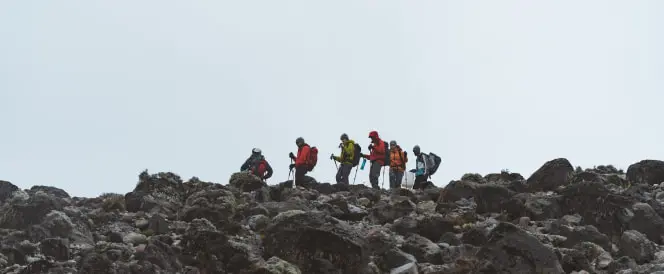
This day starts with another early breakfast and then a trek to Mawenzi Tarn Camp, which is situated at the foot of Mawenzi Volcano, Kilimanjaro’s second-highest point. When you reach the camp, you will have lunch and a two-hour rest, after which there will be an acclimatization hike towards Mawenzi Volcano with a 200 m /656 f) gain in altitude. After, you will hike back down to Mawenzi Tarn Camp, where you will have dinner in the evening.
The acclimatization hike is an easy trek with a slight gain in altitude done in order to speed up the acclimatization process. You should take the acclimatization hikes very seriously. They help increase your chances of successfully summiting Kilimanjaro and save you from the consequences of altitude sickness.
Acclimatization hike //  Change in Elevation:
Mawenzi Tarn Camp (4,315 m / 14,156 ft) // Mawenzi Volcano (4,510 m / 14,796 ft)
Hiking distance: 2 km (1.2 miles)
Hiking time: 1-2 hours
Trekking time: 4-5 hours
Distance: 6 km (3.7 miles)
DAY 5
Trekking from Mawenzi Tarn Camp to Kibo Hut Camp
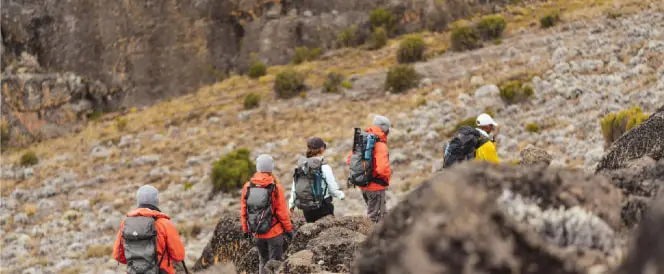
This day will be spent trekking towards Kibo Hut Camp (4,720 m /15,482 f). The landscape will change significantly to become a rocky semi-desert. The actual trek is not very difficult, just remember to stick with an appropriate pace to keep up your strength for the trekking to Kilimanjaro’s summit. When you reach the camp, we recommend you sleep well, avoid strenuous activity, and drink as much as you can, because that very night you will be ascending Uhuru Peak (5,895 m /19,336 f).
Trekking time: 5-6 hours
Distance: 9 km (5.5 miles)
DAY 6
Trekking to Uhuru Peak and Descent to Horombo Camp
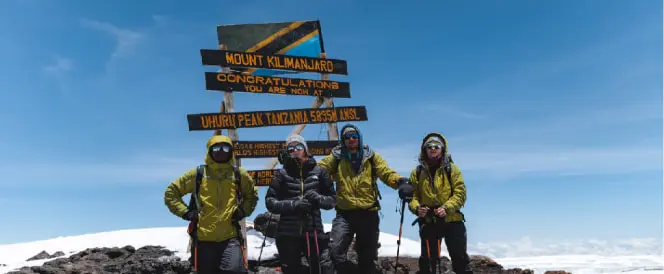
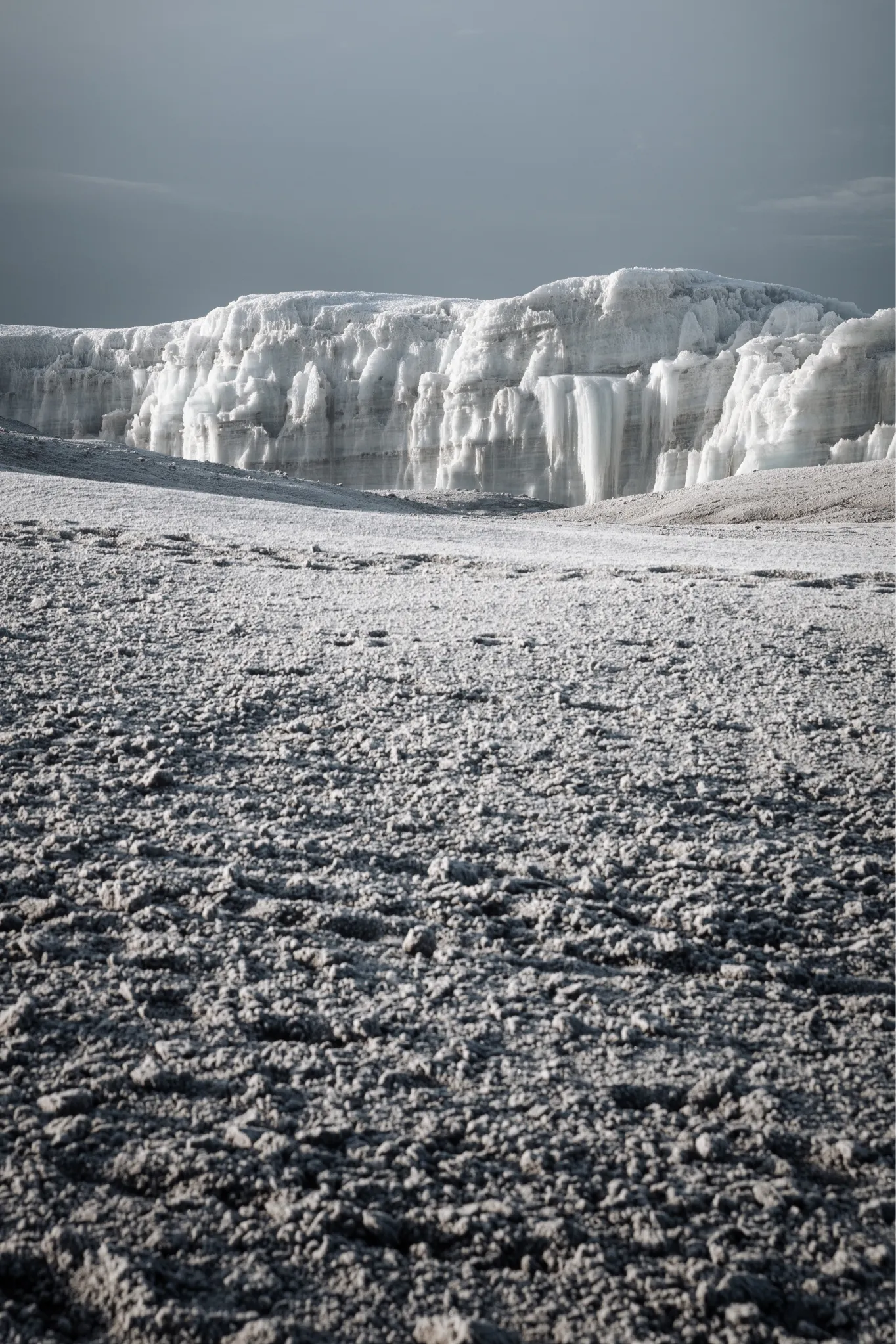
Your group will depart at night from Kibo Hut Camp (4,720 m /15,482 f) and head toward Kilimanjaro’s summit: Uhuru Peak (5,895 m /19,336 f). Technically speaking, the trek is not difficult, however, at this high altitude, even regular physical activity can feel strenuous. Therefore, for the final summit climbers are paired in twos and put under the care of a personal guide, who will closely monitor their physical well-being. After your successful ascent to Uhuru Peak, you can descend to the nearest glacier, if desired. Then you will return to Kibo Camp and after a two-hour rest continue your descent to Horombo Camp (3,720 m /12,202 f).
Don’t forget that 90% of all accidents occur during the descent, including most broken arms and legs. Please pay attention to your feet, as there is a high risk of damaging your toenails.
Trekking time: 12-14 hours
Distance: 21 km (13 miles)
DAY 7
Descent from Horombo Camp to Marangu Gate
You will be offered a warm breakfast in the morning, after which we will head for the Kilimanjaro National Park’s exit: Marangu Gate (1,970 m /6,462 f). After your descent, the whole group will gather to congratulate you, and then you will have the chance to share your opinions on the trip in the guestbook. Lastly, we will present you with your commemorative certificates and provide you with a transfer back to your hotel.
Trekking time: 5-6 hours
Distance: 18 km (11.1 miles)
DAY 8

Departure
Rest in the hotel and transfer to the airport.
PLEASE NOTE:Hotel check-out is at 11:00 AM. In case you need a late check-out because of an evening flight, there is the option to extend your hotel stay for an extra fee.
Prices for Rongai route
Classic Premium // Classic Tarif Package adventure
Our classic adventures are what the majority of climbers are looking for. The combination of great comfort and high safety standards makes our classic Kilimanjaro hikes enjoyable and memorable. This is the most popular option among our clients.
This climbing package includes everything that a climber may need for the hike – our experienced mountain crews, high-quality group equipment, nutritionist-designed meals. Our safety protocols, though, are the same for all our hiking adventures – only the guides with Wilderness First Responder certification are assigned to lead a party. Other safety measures include a supply of oxygen cylinders, complete medical kits and compulsory medical check-ups (two per day).
The progress of each trekking party is tracked with GPS device. You may share the link with your family and friends, who will be able to monitor your progress in a real-time mode.
Before and after the adventure you will stay in a good hotel with caring staff, hot water, reliable Wi-Fi, restaurant and swimming pool.

 Rongai route price per person book this climb with our guest experience team Online
Agatha // Online
WhatsAppChat Online
BASED IN TANZANIA
Contact us. We are always here to help.
 Climbing Cost Includes

All transfers

Hotel before and after the hike

Camping equipment

Meals on the hike


Oxygen tanks

GPS Trackers

Medical check-ups, fully-loaded medical kits, and in-company doctor

Fully-loaded medical kits

24/7 Support via Satellite Phone

All park fees and taxes

Dedicated support team

Innovative and user-friendly travel planning portal

Safe room and storage room

Leave No Trace adventure

Impactful change for the communities
 Climbing Cost Excludes

International flights


Visa fee

Personal gear rentals

Single supplement

Travel insurance

Portable toilet

Lunch and dinner in the hotel
Rongai Route FAQ
Rongai 7 vs Machame 7 to climb Kilimanjaro
Rongai 7 and Machame 7 are two great itineraries with their distinct advantages and drawbacks. Machame stands out with slightly higher summit success rates and more diverse scenery on the ascent. However, this route has a significant advantage: it’s much less crowded than the popular Machame. In addition, this route might be preferable for climbing Mount Kilimanjaro during the rainy seasons. The northern slopes are drier with noticeably less precipitation.
Overall, both itineraries offer something unique and are quite accessible even for beginners. Machame climbs Kilimanjaro from the southern side, traversing the Barranco Wall. On the other hand, the Rongai’s trailhead begins on the northern slope and then goes down via the southwest on the descent.
Rongai route vs Marangu route
These itineraries offer similar summit success rates. Both are good options to climb Kilimanjaro during the rainy season. Yet, there are also large differences between the two. Firstly, the Marangu is the only route that offers dormitory-style hut accommodation in each camp along the route. In addition, Marangu is considered one of the busiest routes with lots of traffic.
On the other hand, Rongai is one of the most quiet and private Kilimanjaro routes for climbing Mount Kilimanjaro. Being the only route starting on the northern side of the mountain, it offers a unique experience off the beaten path. Interestingly, the descent on the Rongai proceeds via the Marangu route, so you’ll be able to enjoy both sides of the mountain in one expedition! We recommend opting for the 7-day Rongai itinerary for a better acclimatization profile.
Rongai vs Northern Circuit
Both Rongai and Northern Circuit are among the least crowded routes to climb Mount Kilimanjaro. The Northern Circuit is longer both in distance and time, requiring at least 8 days on the mountain, while Rongai is available as 6 and 7-day expeditions. One advantage of the Northern Circuit is that you will get to see all sides of the mountain and enjoy a longer itinerary. However, the extended daily hikes might get tiring for some. Rongai stands out as the shorter option and is also great if you don’t want to see many groups of other trekkers on your expedition.
How hard is the Rongai route?
The Rongai route is moderately challenging but accessible to a wide range of travelers with at least an average level of fitness. Note that the seven-day itinerary is easier and offers a better acclimatization profile than its six-day variation.
What is the success rate of the Rongai route?
Around 87% of trekkers who embark on a Rongai expedition make it to the summit of Mount Kilimanjaro – Uhuru Peak, and well over 90% make it to the crater rim. To have a better chance of conquering the summit day and reaching the highest point of Kilimanjaro, we recommend choosing the 7-day itinerary.
If you book a private expedition and need more time to adjust to the altitude, it’s possible to add an extra rest day at any of the camps along the route. Please note that extending the expedition incurs an additional cost, covering extra park fees, staff wages, and related expenses. Nevertheless, this adjustment can enhance your likelihood of a successful summit especially if you feel that the classic itinerary might be too difficult.
Is this route better than the Lemosho route?
The answer largely depends on your preferences. If you’re looking for a more quiet experience without crowds, or want to climb Kilimanjaro during the rainy season, Rongai can be a great option. On the other hand, Lemosho is famous as the most scenic route for climbing Kilimanjaro with very high summit success rates.
How long is this route?
The Rongai route is approximately 79km or 49 miles long, with the longest hike being the summit night push and descent. Starting from Nalemuru Gate (aka Rongai Gate) at 2,364 meters, this route offers trekkers a steady and not exceedingly steep climb to the Kibo Crater Wall and Uhuru Peak.